
New Year’s Day: The Beginning of the Year in the UK
Almost every Nation and Civilization in the world considers the New Year a symbol of new beginnings, hope, and happiness. New Year’s Day is celebrated on January 1 in the United Kingdom, as it is celebrated in the rest of the World, like Western cultures of Europe, North America, South America, and Australia.
It is a significant day in historical, cultural, and social terms. It is not merely the beginning of a new calendar year, but also a day of renewal, self-reflection, and prayer for a better future. As one of the most cherished Bank Holiday, it unites people in celebration and hope for the future.
New Year’s Day Countdown
New Year’s Day Bank Holiday
Observance | Type | Observed in |
Thursday, 1 January, 2026 | Bank Holiday/Public Holiday | Globally (especially Europe, the Americas, and Australia). England, Wales, Scotland, Northern Ireland |
Historical Background
The origins of New Year’s celebrations seem to have started in ancient Roman civilization. In the Julian Calendar, according to the Romans, January was named after the god Janus, who was a two-faced god, one looking to the past and the other to the future. He was also known as the god of doors and gateways, beginnings and endings. From the era of ancient Rome until the mid-18th century, different regions of Christian Europe marked the New Year at various times — on 25 December, 1 March, 25 March, or on the movable feast of Easter.
When Pope Gregory XIII introduced the new Gregorian calendar in 1582, January 1st became the official start of the New Year. Britain also adopted this system in 1752, when the Julian calendar was abandoned, and the Gregorian calendar was introduced.
Since then, January 1st has been recognized as the start of the year in Britain, and gradually this day became a National UK Bank Holiday. This concept signifies that the New Year will provide an opportunity to reflect on past experiences and set new goals for the future.
You can also read Historical events that occurred on New Year's Day.
New Year's traditions in the UK and British Customs
In different parts of the United Kingdom, England, Wales, Scotland, and Northern Ireland, the New Year is celebrated with different traditions, customs, and cultural styles.
Hogmanay Festival in Scotland
The tradition of celebrating the New Year in Scotland is called Hogmanay, which is one of the most famous New Year festivals in the world. The event lasts for several days, including fireworks, music, and traditions such as first-footing. “First-footing” means that the first person to enter a house after New Year’s Eve brings good luck. People usually bring coal, bread, or salt with them, which are symbols of prosperity and peace.

London New Year’s Fireworks
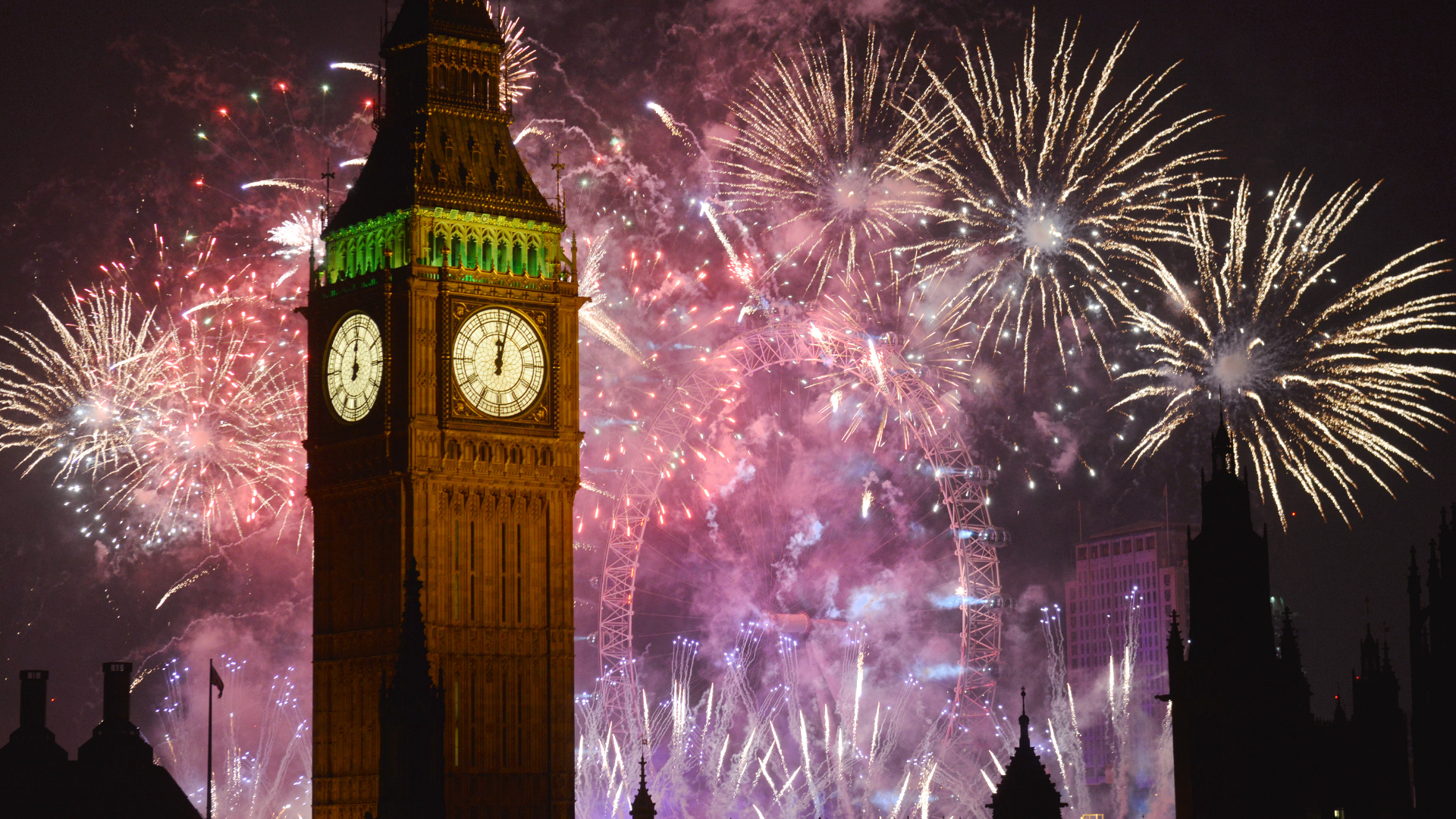
On New Year's Eve in London, there is a grand fireworks display in front of the London Eye on the banks of the River Thames. Thousands of people gather to count down to the New Year, and when the clock strikes twelve, the entire sky fills with colors.
The tradition of “Auld Lang Syne”
This is an old Scottish poem that is sung as the new year begins. Its lyrics encourage reflection on past memories, old friends, and the passage of time.
Fire Festival in Allendale
People in Allendale, England, start their New Year’s festivals with a fire procession. It is also called the Allendale Tar Barl Festival. It is the most ancient and fascinating New Year’s tradition in the UK. The main event of the night is the Tar Barrel Parade, which people call the “Tar Bar’l.” About 45 local men, known as Guisers, wear colorful or funny clothes and carry barrels full of burning tar, sawdust, and paraffin on their heads.
They walk through the streets with a band playing music, and people stand on both sides to watch and enjoy. Just before midnight, the Guisers reach the town square and throw their burning barrels into a big bonfire. Everyone claps, sings, and celebrates the New Year happily around the fire.
Stone Heaven’s Fireball Ceremony
This Ceremony is observed in Scottish culture. At midnight, almost 40 people walk down in high streets while swinging fireballs over their heads. This ceremony continues for about 20 minutes and is followed by fireworks celebrations.
Religious and spiritual aspects
Although the New Year is largely considered a secular (non-religious) holiday, Many people see the day as a time for thanksgiving, prayer, and renewal. Churches hold special services called "Watch Night Services," where people pray for peace, health, and prosperity.
Social importance
The New Year gives people a chance to connect with each other, forget differences, and make new commitments. The day provides an opportunity for self-reflection—people learn from the mistakes of the previous year and make new Resolutions for the upcoming year.
People typically make the following promises on this day:
Vacation and social activities in the UK
January 1st is a Bank Holiday throughout the UK. Most businesses, offices, and schools remain closed. People spend the day with their families or enjoy picnics, concerts, parades, and New Year brunches with friends. Many cities also hold New Year's Parades.
Historical events that occurred on New Year's Day
Many historical events occurred on New Year's Day, which changed the history of the world. Some important examples:
All these events are signs that the new year can be not just a change of time, but also a historical turning point.
New Year’s Day in the Modern Era
Today, New Year’s Day has become a global cultural event. Social media, global broadcasts, and online countdowns have added to the excitement of the day. People around the world share the joy of the moment together as if the entire world joins in a shared celebration.
New Year’s Dinners
New Year’s Dinners in the UK consist of traditional and popular dishes. Some of the most enjoyed meals include steak and kidney pudding, roast beef, salmon, and turkey, along with classic desserts like Christmas pudding and trifle. These dishes are commonly served at home gatherings or in restaurants during New Year’s celebrations.
New Year's Eve
New Year’s Eve is celebrated on December 31, the last day of the calendar year. Around the world, this night is observed as a time of joy and excitement before the arrival of the new year. People celebrate with various gatherings that include spectacular fireworks, countdown events, and music. In many countries, including the UK, this day is not an official public holiday, yet it remains one of the most widely celebrated nights globally. Historically, the occasion has significant importance, as it brings people together, allowing them to say goodbye to the past year and make resolutions for the year ahead.
Places to go for New Year's
On New Year’s, you can celebrate in cities like London (fireworks), Dublin (Ireland), Edinburgh (Scotland), New York (Times Square), Sydney (harbour), Berlin (parties), or Rio (Copacabana Beach). For a warmer celebration, sunny beach destinations like Goa (India), Phuket (Thailand), Bali (Indonesia), or the Algarve (Portugal) are popular choices.
New Year’s Day Parade
The London New Year’s Day Parade, in particular, is a famous event, which is attended by thousands of artists, musicians, and dancers.
Different ways to celebrate New Year’s Day
Upcoming New Year's Day Bank Holiday
Year | Week day | Date |
2026 | Thursday | 1 January |
2027 | Friday | 1 January |
2028 | Monday | 1 January |
2029 | Monday | 1 January |
2030 | Tuesday | 1 January |
You can also see the complete list of UK Bank Holidays 2026
Conclusion
In modern times, not all cultures follow the Gregorian calendar. The date of the New Year in the Hindu, Chinese, Coptic, Jewish, and Islamic calendars differs.
Even then, it is observed globally. New Year's Day is not just a turning of the calendar, but a day of hope, change, and renewal of new dreams in life. In the UK, this day is a symbol of historical heritage, social interaction, and a combination of joy and hope. Whether it is the fireworks in London or Hogmanay in Scotland, the same message is heard everywhere.
If you want to save the complete calendar of UK Bank Holidays, you can download it from our website.
Forget the bitterness of the old year, and welcome the new year with joy.